
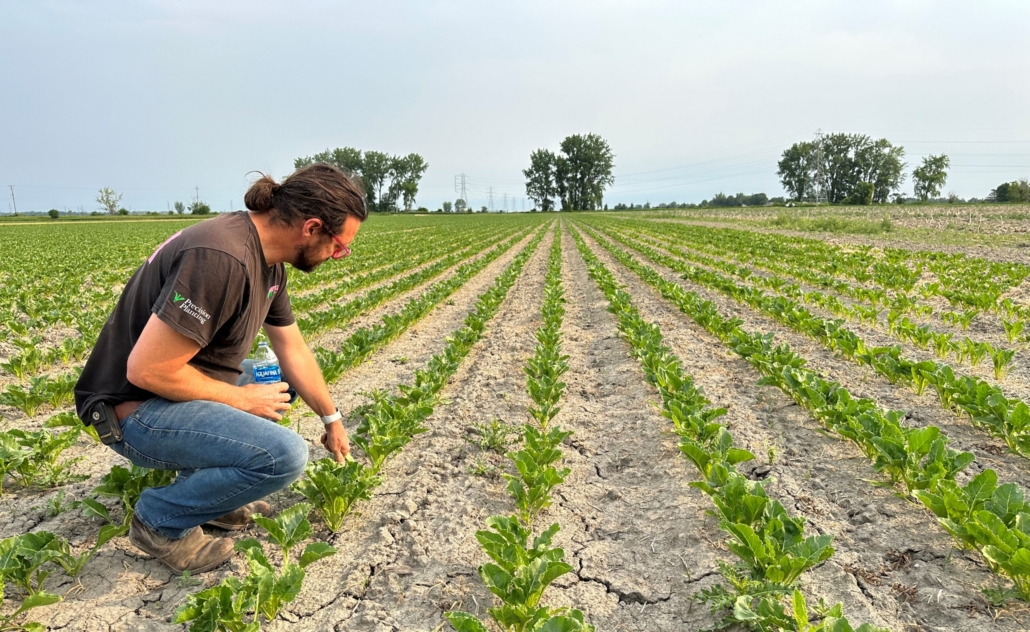
Rural Michigan and sugarbeet farmers facing farm crisis
This op-ed was originally published in the Midland Daily News.
By Michael Houghtaling
September 16, 2026
Michigan is one of the most diverse agricultural states in the country.
Farmers here produce more than 300 different types of fruits, vegetables, and the other crops and livestock that feed our neighbors.
As a farmer, I’m incredibly proud of what I do, but it’s getting harder to survive. That’s why it’s more important than ever that rural Michigan has strong champions in Washington, DC.
This past winter, I hosted Congresswoman Kristen McDonald Rivet at my 120-year-old family farm in Reese, Michigan. I’m the fourth generation to farm the land my great-grandparents once homesteaded, and I’m still growing sugarbeets.
My conversation with Rep. McDonald Rivet focused on the immense challenges farmers in rural Michigan are facing. The old saying is that farmers buy everything at retail and must sell at wholesale prices. It couldn’t be truer, and the retail cost of everything has gone up: seed prices, fuel costs, and equipment costs are all sky-high.
Fifteen years ago, near the start of my farming career, it cost me about $100 to buy a ton of fertilizer. This year, that same fertilizer was $500 a ton – a 400% increase. In contrast, the price for beet sugar has fallen 24% over the past 15 years. I’m paying exponentially more to grow a crop, and the price I receive for it has gone down.
My parents managed to keep the farm going through the 1980s farm crisis – some days it seemed we survived only through sheer will and determination. It’s heartbreaking to once again see family farms on the precipice of financial catastrophe.
As we’ve dealt with inflationary pressures on the input side of the equation, American sugarbeet and sugarcane farmers have also had to deal with an uncontrolled flood of foreign sugar imports putting further downward pressure on U.S. sugar prices over the past two years. That foreign sugar is coming from countries like Brazil and India, which heavily subsidize their sugar industries, allowing them to sell sugar on the world market at below-market prices.
One recent study from North Dakota State University estimated that total U.S. sugar industry losses due to excessive imports of cheap foreign sugar exceed $3 billion over the past two years.
112 members of Congress recently sent a letter to the U.S. Trade Representative asking USTR to use its Section 301 trade authorities to take action to increase the over-quota sugar tariff, which hasn’t been updated in 26 years. Rep. McDonald Rivet was one of the signatories of that letter, along with many of her colleagues on both sides of the aisle.
I deeply appreciate that Rep. McDonald Rivet stood on my farm and heard what we’ve endured over the past several years and then went to Washington and took action.
Agriculture is the cornerstone of rural Michigan. We’ve built communities around our farm families, supporting small businesses up and down Main Street. Michigan Sugar Company, the farmer-owned co-op where I send my sugarbeets, employs 100% union labor. Those are the type of good, American manufacturing jobs we need to keep.
There’s a lot at stake right now for Michigan’s farm families.
I hope DC can follow the lead of our Michigan representatives and stand up for sugarbeet and sugarcane farmers and workers.
Michael Houghtaling is a fourth-generation sugarbeet farmer who resides in Reese.

