
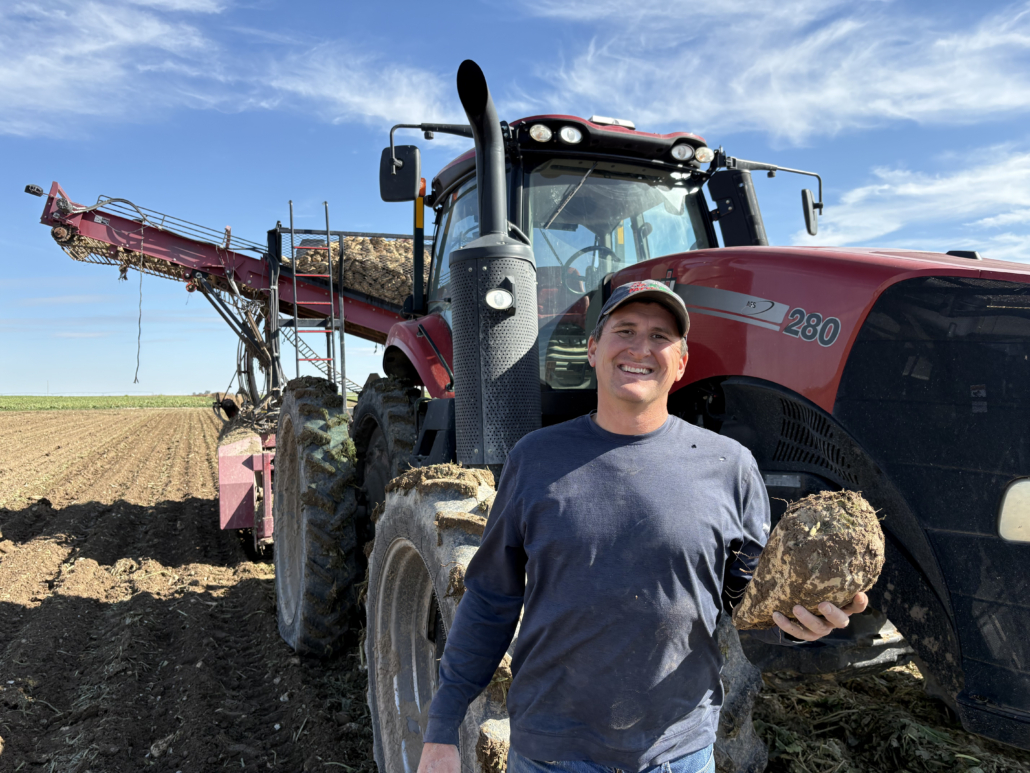
Congress must act now to save Idaho sugar beet farms
This op-ed was originally published in the Idaho Statesman
By
Every spring, Idaho growers are the first in the country to plant sugar beets. As a farmer, I’m looking forward to getting into the fields to plant seeds for one of the two crops used to make the real sugar you use in your kitchen.
The weeks before planting are busy as we repair equipment, finalize crop rotations and planting schedules and complete groundwork. But instead of getting to work on my third-generation farm, I just spent the week in Washington, D.C., in my role as president of the Snake River Sugarbeet Growers Association, telling Congress that Idaho’s family farms are struggling under crushing financial pressures.
If Congress does not act — and soon — some of Idaho’s sugar beet farmers might not have a future in farming at all.
Sugar beets are just one of several crops on my farm, but for years the stability of sugar prices helped us weather the ups and downs of other farm commodities. But in the past two years, the U.S. sugar market has been overwhelmed by an oversupply of foreign subsidized sugar, pushing down the prices American farmers receive by more than a third.
Can you imagine suddenly receiving only two-thirds of your paycheck? Even as sugar prices drop, the cost of land, inputs, labor and other critical expenses remain high or continue to rise. As growers, we also cooperatively own the Amalgamated Sugar Company, which means that increased costs at the factory level trickle down to us at the farm level.
Spring planting normally represents a time of excitement and hope as we look forward to another growing season.
This year, however, in my conversations with sugar beet growers across the state, I am hearing an increased sense of concern. Some are even tapping into farm equity to try to keep the farm afloat for another year.
Sugar is an incredibly important food ingredient, and we need to produce it in America, but farmers can’t do that if they are losing hundreds of dollars an acre multiple years in a row, as foreign sugar overwhelms the U.S. market.
As farmers, we are used to lean years — but this is unsustainable.
We are grateful to have such strong agricultural champions in Congress who recognize the severity of the strain we are under.
My representative, Congressman Mike Simpson, is the co-chair of the Congressional Sugar Caucus and advocates for policies that allow us to maintain sugar production here in the United States.
Both Senators Mike Crapo and Jim Risch voted in favor of the strengthened sugar provisions in the One Big Beautiful Bill Act last summer.
These members are working alongside their congressional colleagues to secure financial assistance and stronger trade policies so we don’t have to confront the growing questions of what would happen to Idaho’s rural communities if we were to lose the farms and factory jobs associated with sugar production — or the impact to our national food security if we had to rely completely on countries like India, Brazil or China for sugar.
While my time in D.C. this week was well-spent, I’m glad to be back on the farm. I hope Congress acts soon to preserve the farming legacies of Idaho’s sugar beet farmers.
Zach Patterson is a third-generation sugar beet grower in Paul, Idaho, where he also grows wheat, corn and hay. He serves as the president of the Snake River Sugarbeet Growers Association, representing 700 sugar beet growers across Idaho, Oregon, and Washington.
