
America must protect domestic sugar production
This op-ed was originally published in The Forum of Fargo–Moorhead
By Darren Hoyme
July 7, 2026
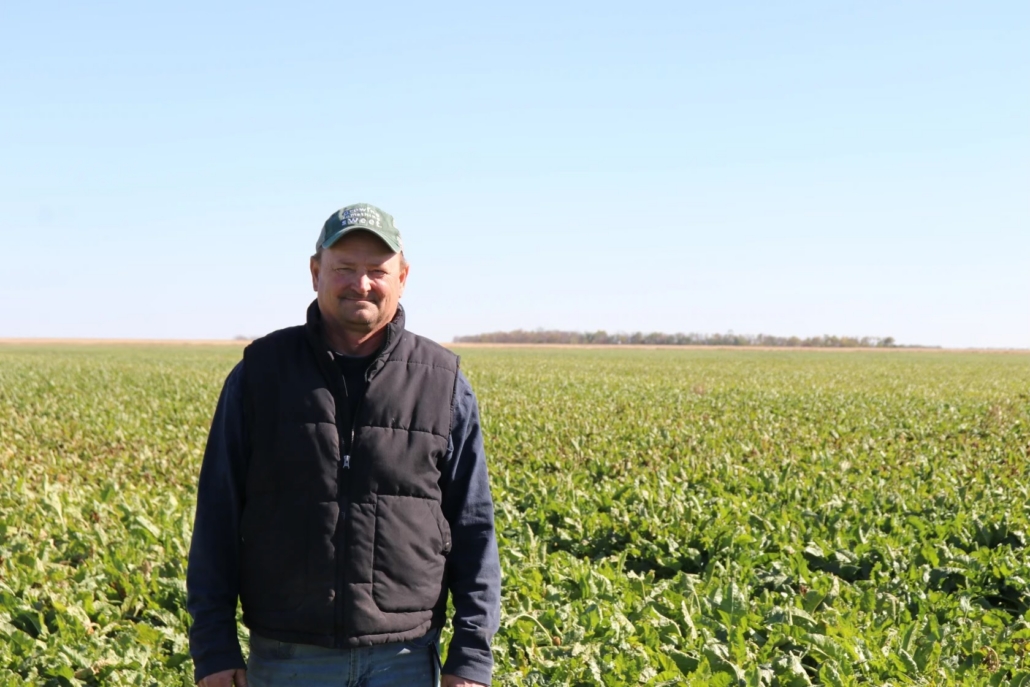
My farm has a story just like farms up and down the Red River Valley – it’s a family operation. My uncle was the first to grow sugarbeets on my grandfather’s farm in the late 1950s after he left military service. Today, I work alongside my brother Joel and his son Owen, and we were fortunate enough to have my son Brandon join us on the farm, too. One day, I hope my son has the same opportunity to farm alongside his children.
Unfortunately, current conditions in North Dakota and across America are driving family farms like mine to the brink of closure. Sugar prices are plummeting while costs of inputs are soaring, all while extreme weather conditions are making it harder than ever before to produce viable crops. I serve as the president of the Red River Valley Sugarbeet Growers Association, and in that role, I talk to growers across this region every day. They all agree that these conditions are the worst they’ve seen in their lifetimes. The losses we are experiencing are staggering and unsustainable.
Our community in Kindred, like many in the RRV, survives on sugarbeet production. More sugarbeets are grown in the RRV than anywhere else in America. The economic impact of sugarbeet production doesn’t stop at our farms and factories; it supports our schools, stores, restaurants, and other local establishments. Without sugarbeet production, every corner of our community suffers.
We need voices in Congress to help us. In the House, I am grateful for lawmakers like Rep. Julie Fedorchak, who represents the North Dakota at-large congressional district and has consistently been a strong advocate for sugarbeet farmers like myself . And in the Senate, North Dakotans and North Dakota farmers have strong representation from Sen. John Hoeven. Recently, they were joined by Rep. Troy Carter, D-La., and Sen. Elissa Slotkin, D-Mich., in leading a bipartisan, bicameral letter with 112 members of Congress , urging the U.S. trade representative to take action against the over-quota foreign sugar flooding the U.S. market.
Fedorchak and Hoeven are putting American agriculture first, and their leadership for the agricultural industry and sugarbeet production is critically important. Our farms and factories won’t be able to hold on much longer if the U.S. cannot control the artificially and destructively cheap foreign sugar imports that are undercutting American-made sugar.
As farmers, we’re used to ups and downs. That’s just the reality of farming. But this time it’s different, and these issues need to be taken seriously. I’m grateful for Fedorchak’s leadership in the House and Hoeven’s in the Senate. They understand that we must get updated tariff rates for over-quota sugar. Without updates, the future of North Dakotan family sugarbeet farms and sugarbeet cooperatives in the Red River Valley is uncertain.
Darren Hoyme is a second generation sugarbeet grower based in Kindred, N.D.

